skip to main |
skip to sidebar

Here's my contribution to the discussion on Transgression over at Winkleman and the subsequent thoughts on Barbarism over at Speaking of Ashes. Both excellent so heres my take - the criminalizaion of dissent. I happened upon a lecture last week at EyeBeam centered around the Critical Art Ensemble. It seemed very appropriate timing in the shadow of the NSA revelations. In case you are not aware of CAE's work over nearly 20 years, they have been exploring the intersection of art, technology, radical politics and critical theory. If there is a transgression zone, they have likely traversed its jagged edge.The panel discussion was for the purpose of promoting Marching Plague but equally to talk about the pending trial of Steve Kurtz, a founding member of CAE and an art professor at the University at Buffalo. For those that don't know, Kurtz found himself at the the intersection of personal tragedy and political nightmare. After calling 911 for his dying wife, his research and art studio were 'exposed' to authorities. Unfortunately for the artist, he was holding biologic materials as part of research for Marching Plague and his general art installations. (Sigmar Polke be warned!) In the current state of hysteria and big govt. 911 zealousness, Kurtz found himself charged with terrorism despite a well documented history as an artist working in the realm of Bio-art. I still remember how sensationalized the local nightly news was at the time. Kurtz was forced to face a Grand Jury, despite facts that he was charged with terrorism erroneously - including the supression of evidence. Apparently any citizen must face a Grand Jury regardless of mistakes by police, false witness, false evidence or suppression of evidence. That should give anyone pause. (If I'm wrong on this please correct me - anyone?)Once you enter the system all sorts of control over your life can be instantly lost. The terrorism charges have been rejected by the Grand Jury, but charges of mail and wire fraud are still on the books. If it works for mobsters, why not innocent artists? Kurtz is a social critic so why not shut him up? Seems to be the tac taken by the court and the FBI. This case is likely a precedent in the effort to criminalize dissent by the U.S. Attorney General's Office - where Gonzo is in charge - and no, not this Gonzo. We all need to ask why the FBI is so insistent in prosecuting this case for 2 years? Steve Kurtz is not some anonymous hack in the shadows. He has a long observed, documented, and revered career as an artist - and professor no less. Too bad his subject is the police state, fear mongering media and most recently the $billion lunacy and immorality of germ warfare programs - and the bad science that goes with them. Mis-appropriated funds anyone? Pet projects for military -industrial neo-cons? All these programs scrapped for decades, suddenly get a jump start right after Bushco take office. Even Francis Fukayama as he's publicly denouncing his brainchild, the Neo-Conservative agenda, couldn't resist saying - "watch out for the pending germ-warfare crisis". We'll never lose the end gamers and the lust for messianic returns but we must resist the abuses of free-thought and intellectual rigor, an intellectual rigor which I think CAE actually manage to succeed at doing. Interesting that no one mentioned them on the Winkleman thread? For more on the trial and case go here - CAE Defense Fund. This could have far reaching consequences - hello bloggers!!! Not only is this an assault on the Bill of Rights, but also, in my mind at least, seems emblematic of the waste, incompetence, mendacity and foolishness of those in charge of this nation and its courts. Is there not a better application of resources?
As a compendium to Kurtz's Rod Sterling'esque sequence of events, there is an essay over at The Difference Engine about police efforts against public photography. Its worth reading, again not surprising, but worth reading. The battleground is the UK but it is certainly applicable here in the States. The sphere for the public - what is left of it, becomes radically smaller with these sorts of efforts against not only artists but regular citizens as well. Here's a link (also provided in the post at The Difference Engine) for JPEG magazine called "Photography is Not a Crime". The irony here is that every second of our lives are photographed in public, on and within public property, paid for by public taxes -yet the public has no right of access.
So I'm left with the thought that transgression could become the very act of citizenship. To be a citizen and not a consumer is perhaps the greatest threat. For artists, this means that we cannot rely on smeared vaseline or 5th generation appropriated ugliness to be a (pretend) transgression - simply our tenacity for understanding and creating a thinking and feeling public sphere. Real Presences.
 Another 20th century music legend has passed today - Desmond Dekker.
Rest in peace
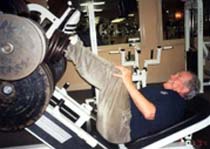
Rev. Pat Robertson's now famous leg press power
...heading to the park but I thought this was something to chew on.There is a crucial
interview over at CBN News about the 101 most dangerous professors in America.
Rev. Pat gets down with expert David Horowitz. Essential reading for homeschoolers and enemies of communism.
 Priceless...

I promised myself I wasn't going to delve into this but after seeing Kazys post today I got inspired to chime in. You must be aware of the NSA wire tap scandal/program that was revealed in USA Today a week or so ago.
In that article the major telecoms were revealed to be giving data to the NSA on millions of phone calls by Americans, domestic calls, not simply the international calls the administration alleged. Since that time, Verizon and Bell South have denied their role, which leaves the story even more murky. The adminsitration has denied data mining and trolling but has apparently found a loophole around FISA (or click here) by purchasing commercial data - not personal data. Clever as usual when needing to break the law.
Well now Wired magazine has reveled that indeed data has been purchased by the NSA (taxpayer money of course) from AT & T - which has never denied the claim. Check out the pdf here. Seems we're all suspects as the NSA creates the biggest database ever assembled. This is exactly what John Poindexter (Iran Contra) has long envisioned as the developer of the Genoa program.
But wait, it doesn't stop with American citizens, the EU is also a part of this. The U.S. is now able to request foreign data through the EU Data Retention Act. This gives acces to phone calls, emails, sms' of EU citizens. Its access that the U.S. Gov. is getting quite agressive in requesting. We have our Orwellian crossroad at hand.
Read Kazys post about the reality of the dark side of network culture as this is a good contrast to the optimistic Economist survey of new media.. You should also check out this excerpt from "A Brief History of the State of Exception" by Giorgio Agamben as cited by Kazys.
Sovietization is apparently here.
 Over at Editor & Publisher there is a little blurb on Ted Koppel's knockout punch and perhaps, omen, over the hired help- security help, that is. Koppel sights the fact that there are 50,000 private contractors on our taxpayer payroll in Iraq. You may be familiar with Blackwater USA as they have recieved the most headlines - including patrols with some steep billing in NOLA. I like how bold Koppel is in this suggestion though- if we're going to fight international battles at the behest of corprate interests, why not have Chevron, KBR or Exxon Mobil pickup the tab? This is who is profiting and making the rules in the first place, let them pay for the force, its the least they can do for a no-bid contract and the spoils of war. Let's admit to the "market economy endgame". Makes sense to me. Its evil on a certain level and it definitely will cause additional moralistic gray zones to go with the green zones, but why not be honest, capitulate and embrace mercenaries. I think Koppel is only stating the obvious. This is what the privitization of all government functions will look like afterall. Is it so different from the strategies employed by the drug cartels and Al Qaeda? All stateless mercenary forces in themsleves. If Blackwater USA wants the "Darfur account" then let our corporate interests pony up.
side note: I have to say I really enjoy Editor & Publisher - its worth bookmarking if you're not familiar.
 File this one under local kids make good.California artists Geoffrey Cunnigham and Carrie Minikel have used a fence to bring their community together and comment on human loss in Iraq. Read here. You should also check out Geoffrey's blog - Non-Prophet Art. Good work you two!
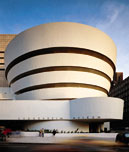 Another quicky related to recent musings on some art blogs regarding the corporate influence on museum boards - most recently between Lisa Hunter and Bill Gusky. Now this topic is not new and has been at the center of a lot of critical discourse over the last several years. We art bloggers are admittedly somewhat behind the curve but the topic is always relevent and evolving. Now there is a book - perhaps the book on the topic to date.
Please note that I am certainly late in being aware of this, but Philly.com ran a review of Musuem Inc. Inside the Global Art World, by Paul Werner back in April. Mr. Werner worked closely with Tom Krens over at the Guggenheim and had a front row seat during the museum's revolutiuonary makeover into franchise and brand. The museum under Krens no longer brought art to an audience but delivered its audience to a new sponsor - Harley Davidson, Armani, etc.
Here's a choice quote from Paul Werner: "The role of the American art museum is to launder the money of its trustees and sponsors, not, as you may think, by turning one asset('cocaine,' for instance) into another asset (say, 'Rembrandts'), but by turning artworks into objects of authority and trust - objects that mediate and are mediated by the worth of money. The American art museum turns art into buzz the way its owners turn pork bellies into pork-belly futures."
Now that's head on!
 I'll keep this brief - McCain was handed his ass by the graduating students at the New School here in NYC. Read all about it via Huffington, here and here.
McCain is the template for a flip flopper, don't be fooled by his 'moderate' misnomer. Cheers to the New School students for being bright enough to see through this sycophant. Now he and his staff are deriding the entire school. If McCain has so much character then why would he support and stand with all the evil bastards in the administration? Being a company man is not what the American people deserve - or perhaps they do?
What I also want to add to this is to pay particular attention to Ms. Rohe's commentary on Fear.
 "Revolutions tend to suck for ordinary people"
I've been itching to do this post for a week and after getting inspired by today's post/commentaries over at Arts Journal, and by a related post in response over at Art Powerlines, I'm finally getting to it. Edward Winkleman touches on today's discussion of art blogging vs. traditional art journalism as well. I'm not going to go to deep into this but to nutshell my opinion, I echo various commentaries that the blog fleshes out the discussion in general. There is no need to completely replace traditional media and arts experts, but there is a need to open up discussion and provide more access and avenues for people to get into the nitty gritty. Blogs provide context and frankly there is a hell of a lot good writing and critical thinking going on out there. We need this - and more of it. Critics miss the point - the singular voice is discredited, and why not have some raw unfettered grousing going about real topics? It can't all be about Jerry Saltz. We need small groups getting into it and playing off each other's knowledge or lack there of. Tyler Green says it quite well on Winkleman today in his response to Chris Lavin. I think the blog can open up the art world to the real world - and not a minute too soon!
Anyway - what I wanted to dig into was something that I came across thanks to the always relevant and erudite posts at kazys.varnelis.net.
A few weeks back, the Economist ran a great series on NEW MEDIA. (take some time and read all of the articles) But in case you don't let me provide these nuggets.
The blog and its offspring -wikis, vlogs, podcasts, metaverses and folksonomies - are really the bookend of movable type, 550 years after Gutenberg. We are at the begining of a new era which some call the age of participatory media - I've heard Network Culture used as well. Duh, right? But did you know that 57% of American teenagers create content for the web? That's a big number for only one demographic. A new blog is created every second of every day and the 'blogosphere' is doubling in size every 5 months according to Technorati.
!!!
This has a broad implication. Traditional media models are based on "aggregating large passive audiences and feeding them product" whereas new media audiences are increasingly small and often tiny, seeking and using content created by peers or themselves. The former 'audience' is now audience and provider. This changes public discussion entirely and what is subversive here is that "institutions are turned into conversations". Barry Diller gets quoted as saying he thinks talent is a finite pool - why would anyone want to read a dullard with a blog?-typical for a media mogul who has FOX on his resume. He's completly wrong obviously as the article goes on to point out and likens what we are about to see as a creative explosion on a sizemic scale, rivaling biodiversity itself . There is no one source of truth - but multiple truths and now we all get to sort it out together!
The blog is essentially social, the unedited voice of a single person for the purpose of having a conversation, a shared space. This is so critical for a society that lost its public forum decades ago - if it ever truly existed. The articles continue on to cover wikis vs. vandals and citizen journalism which already has tranformed South Korea's media structure due to the success of Ohmy News. That's saying alot for arguably the most technologically advanced country.What was the impetus behind Ohmy News? To tilt the conversation away from conservative bias! It worked, all traditional media had to re-organize itself to compete. So I have to agree with Dan Gilmor of Grassroots Media (which stalled here in the U.S.), the more journalism the better. Why - more context for what is going on, plain and simple.
 So what about the artblog? Is it going to upset the traditional journals and critics? I sure as hell think so. It has to if we hope to have a critical realm that matters. Its far too insider now and frankly, I'm getting more out of reading from fellow practioners and arts professionals than the blue chip journos. I don't want to read kissass reviews of Ivey Leaguers and constructed artstars anymore or who the young hot phenom is and why we need them. I want substance about why we are making art - why it matters and where we are collectively in dealing with that. Can we as artists connect to our society at all? So blog away!! Let's continue what is shaping up to be a great dialogue.
If you want to consult the experts, here's David Sifry of Technorati and Chris Anderson of Wired plus many more. There's a ton of material to go through here but its all so relevant.
illustrations from The Economist
I was clearing through a few months worth of papers and reference materials when I came across a yellowing photo copy given to me years ago by an artist I much admired. It was a list of 20 questions every 'young' artist should ask themselves. I was blown away by how long it had been since I had read these and wondered why I hadn't been reading them everyday.
These are REAL questions for today and jump off the page as I write now. I think they bare on a lot of the issues being covered in the art blogosphere over these last few weeks and months. So without further adieux:
20 QUESTIONS TO MYSELF AS A YOUNG ARTIST
- ARE YOU GOING TO MAKE ART FOR THE REST OF YOUR LIFE?
- DO YOU MAKE ART AS IF THE WORLD MATTERED?
- COULD ART BECOME A THING OF THE PAST; DOES ART HAVE A FUTURE?
- HOW DO YOU MAKE ART FOR A SOCIETY IN DISARRAY?
- WHO DO YOU MAKE YOUR WORK FOR?
- CAN YOU MAKE ART FOR BOTH THE SELF AND THE WORLD?
- WHAT DOES AN ARTIST BRING TO SOCIETY?
- IS SAYING I AM AN ARTIST A STATEMENT OF PRIVILEGE AND/OR RESPONSIBILITY?
- WHY IS ART ESSENTIAL TO YOUR WAY OF LIFE?
- CAN YOU IMAGINE YOUR LIFE WITHOUT ART?
- WHAT IS THE NEXT JOB OF THE ARTIST?
- IS THE ARTIST BECOMING THE GUARDIAN OF THE "SERIOUS"?
- IS THE ARTIST THE BEST CRITIC OF SOCIETY?
- DO YOU MAKE ART "AS IF" NEW YORK DOES NOT EXIST?
- BEYOND COMMODITY AESTHETICS, WHERE DO WE GO FROM HERE?
- HOW DO YOU MAKE ART FOR LEAN TIMES?
- ARE THESE "DIRTY WORDS" COMING BACK: BEAUTY, SPIRITUAL, FORMAL, ETC.?
- WHAT CAN ART BECOME AND WHERE CAN IT GO?
- HOW DO YOU FIND YOUR WAY TO YOUR PLACE?
- AFTER NOW WHAT?
- Peter Stroud
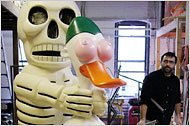
So since another week passed without a scribble its nice to return to another hot topic courtesy of the NY Times. I know I'm at least 3 days behind here! So this very topic was covered brilliantly by Lisa Hunter last week and recapped again yesterday after the Times article. In addition to Lisa's head start on the Times, Bill Gusky and Art Powerlines have both added to the discussion. Bill in a perhaps ill advised rap :) and Art Powerlines in a very cutting and insightful social class angle on the subject of 'thinkers' and 'fabricators'. I think this is a very astute understanding - blue collar/white collar, a Caste system if you will (couldn't resist). The initiated and those that allow them to cross mud puddles without harm. What is also of interest is that there does seem to be a natural acceptance of a 'factory' when it comes to sculpture - its practically expected at this point. (I should note that I think the process and the result of McCarthy's work is quite effective) The small collector doesn't by sculpture too often- but the big ones and institutions do and there seems to be a parallel in ambition, cost and scale with artists that are synced into that collector niche. You need an army to pull these projects together. Spectacle needs grunts.Now there are plenty of painters employing dozens of artists too- a few show with Deitch, and I'm sure you can tell which ones- but somehow that doesn't sit well with me. Painting (outside of murals) just doesn't feel collaborative. It should be a mirror to the maker I think, and that's not some romantic bullshit. Its the real - or rather the real that I think is special to painting. The old masters certainly had underlings toiling for them - sometimes scale and demand requires it, but in the end those pieces aren't generally admired as much. Why? because I think we expect intimacy with painting and when painting doesn't have that we feel a little gipped. Perhaps this is a double standard but I think most art audiences agree. I want to know that a person was behind this object for all my outdated humanistic reasons - because it matters.Should fabricators get credit? Would be nice but it depends on the conceptual angle and I think many assistants want the background anyway. This is the artworld after all and name is everything.
It may be best if people don't know you work for Kostabi world. The buyer's are paying for the illusion anyway- one Barney - one brand. Because that's what we're talking about really in this discussion of fabrication - BRAND.By the way, I despise that qoute by Deitch - last I checked, philosophers craft their own material based on precedent .....uncredited TA's aside ;) But really, as for today's artists being loved as philosphers, what a load of crap. What philosphy is being espoused? I thought it was dead along with painting and art criticism!!ps. no such thing as post-conceptual.

Over at Informed Comment, there is a great little nugget courtesy Andrew Sullivan about the 'fued' between sodden Christopher Hitchens and the always sober and insightful, Professor Juan Cole.
If you don't know Juan Cole you should. He should get a Pulitzer every year this inane war lurches forward in Iraq. His journal is the real record of events and about the only place where you will find real discussion, real proposals and the real map of who is shaping the reality in Iraq and D.C. He has an uncanny ability to call it months in advance. In short, he is the expert on Iraq.
Hitchens is a revered author and former writer for the Nation (in case you are clueless) turned Bush cheerleader on Iraq. Now he's rolling out the Iran rhetoric - Kenneth Pollack anyone? I still credit him with the definitive Kissinger book. Too bad he's devolved into a big drunk. You can still identify against fascist and nihilistic Islamist impulses without being a neo-con bastard apologist for incoherent foreign policy.
Exihibit A: Paul Berman

No this isn't some right wing call for defending the legacy of Christopher Columbus! This is a new draft Bill being proposed for Congress and is the brainchild of artist Jeffrey Vallance of the California College of the Arts. For the full details go to the homepage for the project.
The idea is to support all working artists living in the United States! Having watched the NEA and the NEH be regularly gutted over the last years and seeing how a small percentage of artists get to have a piece of the big economic pie shared by dealers, collectors and auction houses (and just a tiny fraction at that)- I'm more than happy to see this ambitious proposal. The idea presented is that the arts are a civil responsibility and that artists deserve to benefit from an effective infrastructure that recognizes visual artists based on a commitment to their career not based on their content. They've done their homework. This isn't some 'feel good about creativity' bullshit. The econometrics are there, the research is there and the case for historic need are there. This is a worthwhile effort so I encourage everyone to learn about this and try to support it in some way.
As cited on LeisureArts last week, there needs to be a broad goal of growing economic access for artists like this draft bill addresses. LeisureArts proposed a degree that focuses on how to actually create capital streams for investment in art. I think this is smart, because artists are at the bottom. There are only a few servicable systems to support artists globally that will be able to keep pace with the rapidly changing world economy-
[ex. Artist Pension Trust, H.R.1120, CA Civil Code 986, The Art and Collectibles Capital Gains Tax Treatment Parity Act, EU subsidies] but many of these are in their infancy and unproven.We will be forever in some kind of serfdom without new models for survival.
I was just having this discussion with an artist on a train to Hudson, NY yesterday. We were mentioning how the subjects of the Art Market, economic viability, the role of dealers and the MFA mess were all hot topics - continuously on line for some time now. That people feel frustrated for the most part in reconciling career and art - and in every way that can be interpreted. We took all the pejorative jabs we could muster at all of our real and imagined villains, from the Wall Street nouvea riche to curatorial studies, but the sad truth kept coming back to us that artists do come in last -across the board: musicians, dancers, writers,etc. All the 'stuff' is mostly built on our backs and yet the artist rarely gets to benefit beyond the 1 sale with a 50% cut (or worse, pennies for a word).
Yo, there's no royalty check coming from Christie's!
What a great value for everyone else. What other industry gets a 'product' which they put no R&D into, provide no manufactuing costs (I know there are exceptions here, but few) and yet get half of the consignments sales! And then have 25 artists on there roster so no one gets a show, save for every 2 years! We talked about the need for artists to start reclaiming some things for themselves - take a little back from the dealer and the curator - start finding Direct routes to the market, direct routes to each other. Its an interesting proposition to undertake I think. How does the artist go direct? Can you circumnavigate the gallery infrastructure? is it wise to do so? Are Web sales the answer? Should you hire your own PR? Can you create alliances/economic blocks with other artists and incorporate curatorial participants and non-practioners? These are real questions to consider.
As an aside, my friend brought up an interesting point that curating in the past was done by art historians which is no longer the standard. That is a big shift in itself. Its not to say that an art historian is any good at curating, many are lousy, and inferior to less academic curators, but it does say that the intent of curating has changed a great deal. I still argue that there is vital need for the curator as well as the art critic within this mutant of an equation,
but one does wonder how these shifts are affecting the pecking order and therefore the economic life line of the artist. (More on curating perhaps later)
Artists have to reassert themselves at the center of the equation more than they have in the recent past. They have to create economic independence so that ART can continue being relevant. Make the Public!
Remember Chernobyl? Well 20 years after the disaster some interesting things are stirring in the fields of radiation. The BBC reports that "the exclusion zone around the Chernobyl nuclear power station is teeming with life. As humans were evacuated from the area 20 years ago, animals moved in. Existing populations multiplied and species not seen for decades, such as the lynx and eagle owl, began to return. There are even tantalising footprints of a bear, an animal that has not trodden this part of Ukraine for centuries." Dr. Moreau anyone?
 Its an interesting new context for the place when juxtaposed with the work by Robert Polidori shot just a few years back. These are moving images of decay and ruin - the nuclear project turned nightmare, the atomic equivalent of Pompei.
So this exclusion zone as termed by the BBC also draws a startling parallel with Andrei Tarkovsky's film Stalker. A true masterpiece from 1979. In my view it may be the greatest acheivement by the director - at least as good as Andre Rublev.
(Mirror is great too) If you haven't seen Stalker, here's the brief:
In a future Russia, there is an acident (nuclear or extraterrestrial) and the result is a massive area outlawed and guarded by the government called the Zone. Its a mystical and mythical location that citizens try to reach for enlightenment or healing. Stalkers are a group of outlaws with mental gifts courtesy of their exposure to the Zone. They act as guides or 'coyotes' if you will, guiding people illegally into the Zone and eventually into the Room. Its a beautifully moving and humanist film as you follow a writer and a scientist on their journey into the exiled Zone.
Funny how nature has found its way without human interference, despite the spoilage. It raises some big questions on the nature of survival and what happens to the places after we discard them.
Read this essay by artist Joel Adas at Artists Unite. I've known Joel for some time
and its wonderful to read someone talking so frankly about the painting experience
and how critical seeing is to the creative process but also to the intellectual and
emotive integrity of making. We should never loose sight of empathy.

Lois Dodd
Red Poppies and House, 2004
So this a riff off of an excellent ongoing post at Artblog Comments regarding the form and function of art and all the collateral damage that goes with that. I recently read a statement by writer and artist David Robbins (Thanks Frieze) that the current function of Art is to succeed in the ART MARKET. The modernist project to explore functionlessness has resulted in this great irony. Art's primary role seems to be only a conduit for venture capital - a portfolio diversification that allows the buyer/investor the illusion of importance and influence, in some cases this is obviously a reality but not every collector is a Rubell.
This market observation makes sense - beyond a modest Marxist critique - that we seem to be getting more and more drawn into the financial prism of the now, international art market. This surely is a natural side affect of globalization but WHY has this happened? What has ushered in Art for Market Sake?
In addition to globalization and new financial outposts (too big to cover here) , one answer is probably the MFA machine and the corresponding youth quest. We are churning out 'masters' to the tune of 10,000 a year in the US alone. With so many artists - for those that can find a way to sustain a studio practice - there needs to be an expansive retail mechanism. Its simple, supply requires demand. So demand is created through the cultivation of new dealers and by natural extension, new collectors and in some cases the reverse. The lines are easily blurred - not many working class galleries popping up! This cultivation between dealer and collector is key, because let's face it, artists will always be lined up at every gallery begging for a show - even if that gallerist is a money laundering sociopath! Cultivating demand with collectors is what fuels the market - where all this money is coming from, I can't begin to guess. I suppose somebody's shares in Bechtel are paying off.
On the surface, at a basic commerce level, this sounds good for a lot of artists and good for the gallery biz. More artists can make a living, more galleries can make a living - we should all be happy. If you're not then you obviously aren't good enough to compete and your whole world view is shriveled by resentment. How dare you complain! Perhaps, but is the current wealth of the art market good for ART? Who decides? artists, critics, collectors, gallerists? Are they even connected to one another beyond the art transaction? Are they? Really?
For me, in thinking about Demand, we have to ask about Value. If your spending big bucks don't you want the Best, aren't you being offered the best by art experts? Possibly not and by the look of things in Chelsea - certainly not.
So what is valued? Many important things are still valued obviously - but it also seems that increasingly, value in and of itself is not - I know that we can't use such judgemental words
but we must try. There has to be some logical grounds for the word and its application, otherwise we're just mired in some psuedo faith of subjective inclusivity. Value has to be part of the equation beyond financial value - but again what is valued? Is it nameable?
As mentioned here, its as if Art isn't so much a part of the general critique. The personality [read brand] behind the art is what is important. Exhibit A: Matthew Barney - no greater brand than that - big budget, big star and big ears. The brand is a strange synthesis of the artist and the gallery, as well as the very outlets used to position the brand in the first place. We don't talk about art in NYC , we talk names and locations and prices, its a foreign language of association. Its as if a Mark Lombardi drawing has begun to breath and crawl through Chelsea like some depraved monster.
It is the career project that is primary - are you 'cool', and young and connected? Have you been spotted on ArtNet or in Paper magazine recently? Do you run with the fashionistas and taste makers? (by the way, how many times can As Four be pictured in Paper magazine?) Are the right collectors on your CV? Are you a hot young investment? Can I be popular and affect 'downtown' by buying your work? There seem to be a lot of Joneses out there!
The hip brand factor fueled by the student flavor of most gallery programming has us drowning in an Urban Outfitters aesthetic - an adolescent fantasy freakout of recycled suburban hedonism and self worship -a reflexive narcicissm of gadgets, glitter, goo and gonads. Please, no more cartoon birds, deers, and wolves surrounded by odd assortments of wood grain! The art career project becomes a tragi-comedy paralleling the movie and music industry (and at worst indie fashion lines) There is art for sure within that coupling of music and film but it is secondary to the spin and product nature of those industries. I'm sorry but the artworld version of this can't help but feel stilted and provencial in comparison, art isn't that hip after all! Art School Confidential anyone?
If personality or cool is valued above art historical context, if career and art market success has primacy over content and form - for artists, gallerists, and collectors alike, then how do we measure oursleves in relationship to the larger continuum of Art? And what of the responsibilty of being an artist during a time of global crises?
What are we making this for?
 As we see the daily dosage of violence in Iraq - or rather don't see - its worth noting that the bulk of the sectarian fighting is being executed with car bombs. For an excellent and saddening history on the use of the car bomb for political ends, read Mike Davis' two part piece on Tom Dispatch. As a side note, there are over 44 million entries for 'car bomb' on google.Having read the piece by Mike Davis I'm reminded of the amazing work done by the Atlas Group. Its a project developed by artist Walid Raad and is focused on documenting the contemporary history of Lebanon. They did a haunting and exhaustive study on the use of the carbomb during Lebanon's civil war. This is real political art and contemporary history. Not to be missed - two years later the work still creeps into my mind on a regular basis.
Luckily for the party set, the other google results look something like this:

 Dan PerjovschiThis is an incredible 'cave drawing' that really does just say about everything you need to know about contemporary life!
For more on the artist check out this month's Frieze.





 Posts


